
Group 61
- Feb 8, 2022
- 3 min read
Minimise, Minimise, Minimise, Minimise, Minimise, Minimise, Minimise,
Our mission statement is to minimise the impact that we as architects are making onto the natural landscape. By looking at both personal and corporate perspectives, we aim for an effective change upon following the basic prototype -- minimise on what’s unneccessary and maximise the functions of every inputs we used.
We intend for our design and thought process to be one where we look into how through designing sustainably we can create a harmony between infrastructure and nature. The ultimate goal is to create a norm of inhabitation with human which the nature can be part of our daily lives. We will be looking into methods that are either carbon neutral or carbon negative, in order for us to benefit the surrounding area. We will be studying precedents that have made a positive impact into the world through either creative or thoughtful materiality, technology or design.

Korea National Arboretum Children’s Forest School
in South Korea was designed by GEEUMPLUS Architects. The main design concept of this project is “Biophilic Architecture Design”, which coexist Ecosystem, Architecture, and Nature. The first step in dealing with the environment is to preserve existing old fir and cypress trees to reduce the damage to nature. Through the significance and vulnerability of the bee in the ecosystem, the architects transformed the honeycomb image into the design and then conveys the message to educate people on the importance of climate change. Utilising eco-friendly thermowood exterior finish, creating different themes of outdoor spaces, and smart reuse rainwater constitute this environmentally responsive design.

Bosco Verticale
in Milano is a residential building constructed in 2014 by Boeri Studio. The Vertical Forest represents an architectural concept which replaces traditional materials on urban surfaces using multiple types of vegetation for its walls, thus increasing the biodiversity. The two towers of the construction nested occupants in a green space, which absorbed CO2, minimized the heat-island impact and reduced the energy consumption. The building creates a unique urban ecosystem being the home of over 1600 specimens of birds and insects. Bosco Verticale also has a huge impact on the skyline of Milano due of the fact that the area was dominated by unused railroad tracks and decaying industrial buildings. In my collage I wanted to present the environmental impact the plants have on the building.

Material Recycling
When creating this collage, I first took precedent from ‘Can Cube’ by Archi-Union Architects, whose project used recycled cans to create a functional façade of the structure. This façade is encased also in an aluminium recycled frame, and is both sustainable and practical, with the ability to alter the light input from the natural environment through the cans. This idea really got me thinking about the personal consumer side to this idea, and how we as a consumer of these products like cans could then incorporate these back into a design which minimises its energy by reusing this for an architectural purpose. My collage looks at this, as well as the idea that big corporations who manufacture these products should also be heavily encouraged into using these recyclable ideas into their infrastructure projects in order to minimise their already incredibly large impact.
1 Angel Square, Manchester
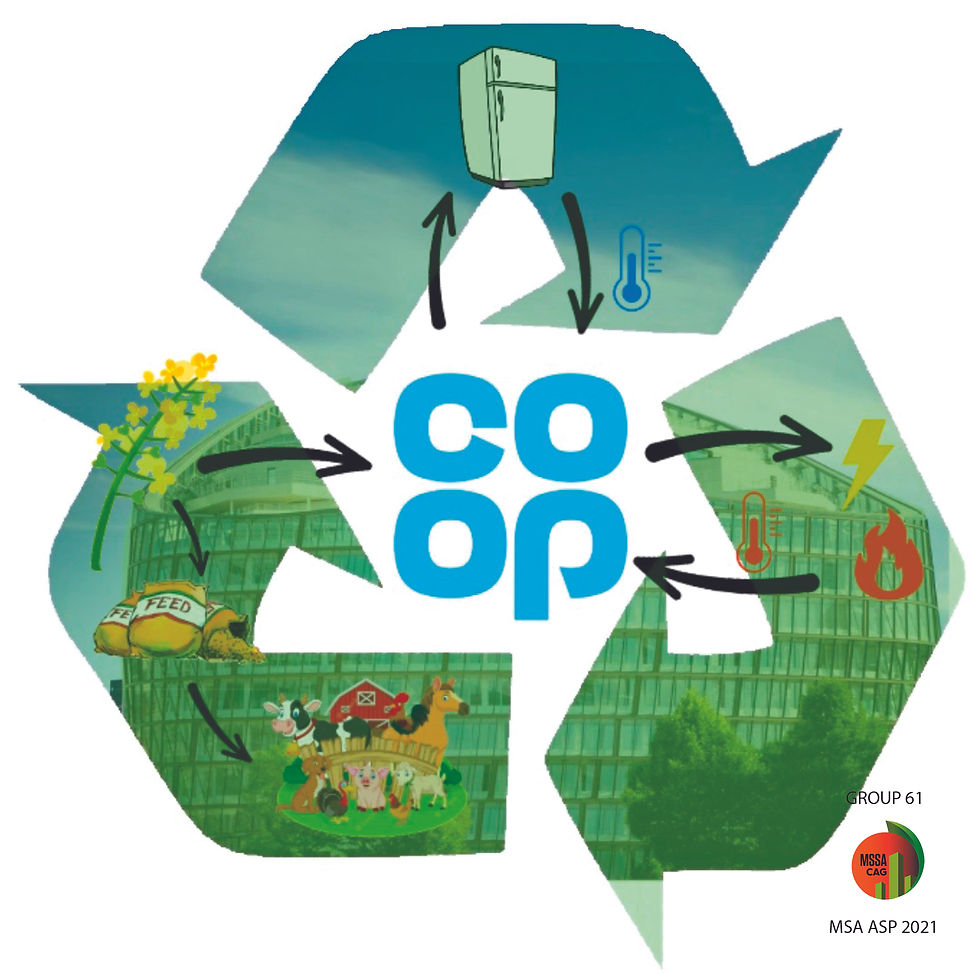
by 3D Reid sets a leading example for sustainable commercial architecture. When constructed The Co-operative headquarters achieved the highest score ever given by BREEAM and was promoted as ‘the most environmentally-friendly building in the world’. The Co-operatives local sourcing and sustainability principles are put into practice within the building through use of a CHP plant which is fuelled by rape seed from British Co-operative farms. The remaining husks from the seed are recycled into animal feed, reducing any waste. Additionally, the ‘waste’ energy from the plant is then sent to an absorption chiller and used to cool the building. This collage therefore represents a particular aspect of the buildings functionality but also conveys the building and the Co-operatives ethos.

Ford Foundation Center for Social Justice
by Gensler represents how old buildings can be transformed to meet new standards that also goes along with RIBA 2030 Climate Challenge targets. This aesthetically pleasing giant is located in New York and has already won The COTE® Top Ten Awards, which is the industry’s best-known awards program for sustainable design excellence. The most important goal of this renovation was to make old design function in the modern days and, as the matter of the fact, the redesign reduced the foundation’s own office footprint by one-third. This number encourages us to reevaluate situation by bringing all greenhouse gas emissions to net zero by 2030.


Comments