
Group 11
- Mar 1, 2022
- 4 min read
We understand that to help with the climate emergency the built environment has to contribute to this given that around 40% of greenhouse gasses emitted are from the built environment. We have looked at this through the zero-carbon city approach, adaptive re-use, vernacular architecture, use of recycled materials and design for manufacturing each explored further through the series of collages.
Furthermore, we also think that we need to start with the question of whether a new architectural intervention is needed. Sometimes the most sustainable approach is an existing building that is adapted. We also think we need to look at it from a community approach in the sense that collaboration will determine if an intervention is needed and see what benefits it can bring to end-users, not just building for the sake of it.

Low Carbon City
This collage focuses on the Low Carbon City, Masdar, where the connection between; nature, city, people and infrastructure are influenced by the need to reduce net carbon emissions. Although there is no Zero Carbon City Masdar is ambitious to be one. As one of the earths most sustainable cities, Masdar (designed by Foster + Partners) focuses on the three pillars; social, economic and environmental sustainability which are shown in the collage, along with the UN’s sustainable goals. Masdar encapsulates public green spaces and advanced technological ‘clusters’, through the application solutions in energy, water and mobility. Elements such as Eco Buses, Solar powered hydrogen fuelling station and wind towers highlight the sustainable nature of Masdar. Wind Towers ensure a temperature reduction creating a cool breeze without the use of energy. Whilst the cities mobility features use solar powered electricity. Masdar acts as a ‘greenprint’ allowing the continuation of city life and its opportunities, but still maintaining the principles of a circular economy.

Eccleston Yards
Our collage highlights the Eccleston Yards, by Buckley Gray Yeoman, which allows a breath of new life to a once derelict car park. To tackle the climate emergency we must work sustainably, as ‘the most sustainable design is one that exist’, thus the importance of Adaptive Reuse. BGY explicit use of elements like a central courtyard, enhanced by stone and iron, encourages connectivity and animates urban life.
Eccleston Yards - A perfect embodiment Adaptive Reuse by continuing diversity within the city whilst creating a unique and vibrant atmosphere for the people.

Vernacular Architecture
As a collective, we have decided that the importance of the vernacular should be prioritised when designing and constructing our buildings. This will be an essential element we, as architects, should consider, as it not only benefits the environment but also retains social, cultural and heritage values within communities. By embracing regionalism and local knowledge of traditional structures and materials, we argue that this ensures energy efficient buildings that can be highly sustainable, therefore contributing to the fight for the preservation of our climate. A successful account of this is seen in case studies such as Swiss mountain huts, temporary winter homes such as igloos and the National Park of Mali, which all embrace traditional structures and reflect their local vernacular, while effectively having minimal environmental impact.
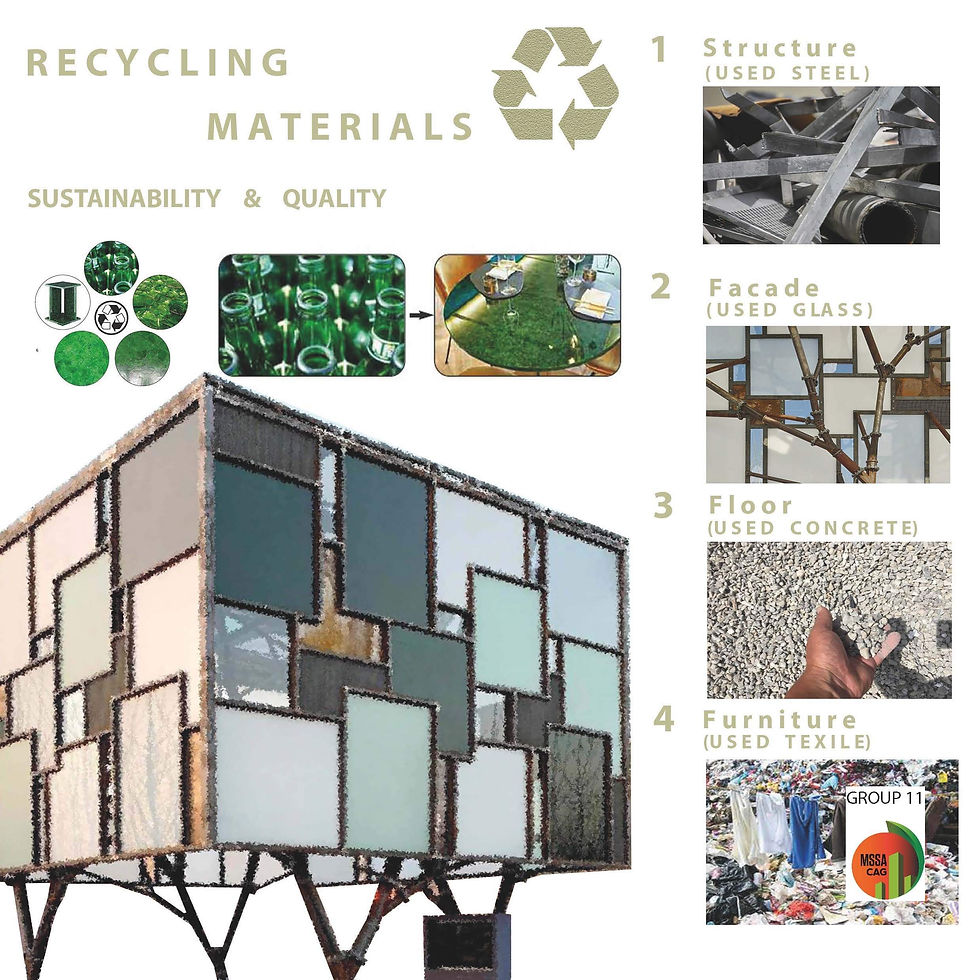
Recycled Material Building
Through being conscientious about the technologies of our materials and where they come from, we maintain our social and environmental duty as architects. Therefore, we have decided that using recycled materials and ethical construction methods are essential in ensuring our profession reduces harm to the climate. Through prioritising ethical means of obtaining materials, we can also reduce a material’s carbon footprint by using nearby local resources, materials and construction methods. A successful example of recycled material building is found in case studies such as the Mehr.WERT.Pavillon (Added.VALUE.Pavilion) from the Federal Garden Show 2019 in Heilbronn, which uses materials that have already gone through at least one life cycle. The reuse of materials such as steel from a dismantled coal-fired power plant, recycled glass containers, mineral building rubble and recycled plastic materials, proposes an opportunity to develop our economy positively without consuming any of the scarce resources of our planet.
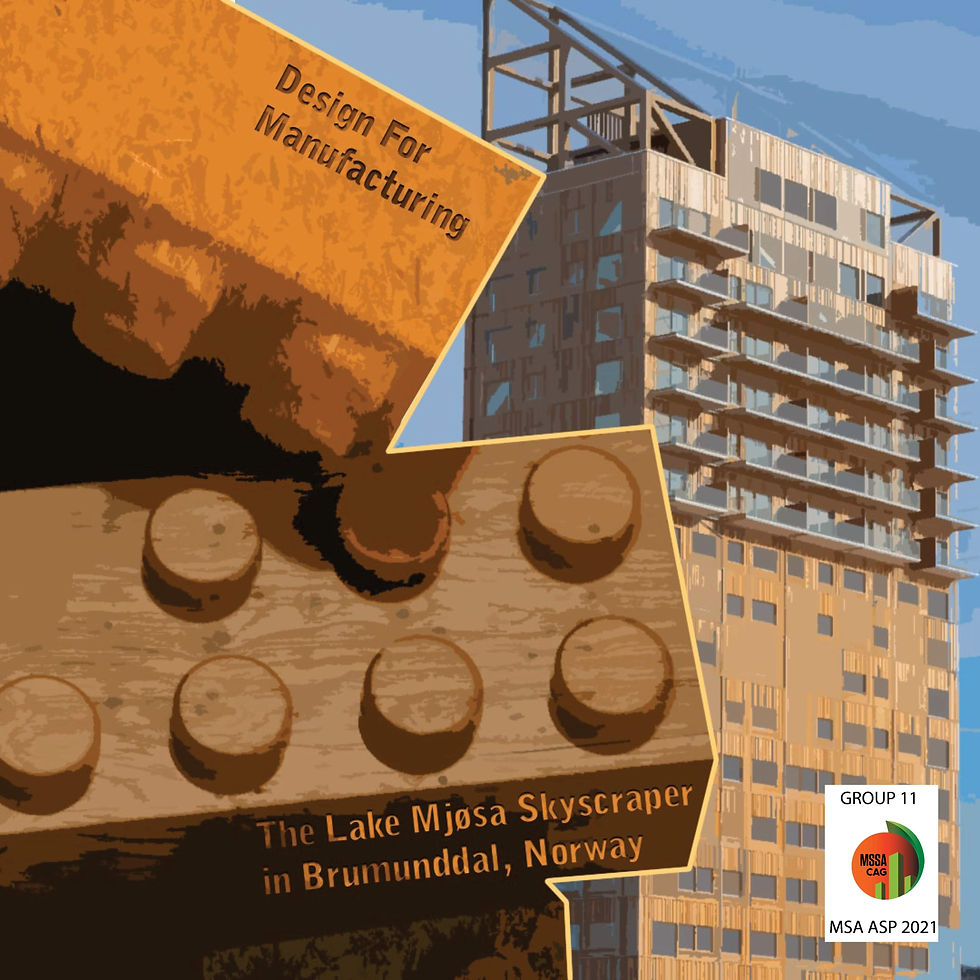
Design for Manufacturing (Construction Use Sustainable)
Design for manufacturing comes in very handy when talking about how we could enhance sustainability during the process of construction. One of the effective practices is to employ prefabrication, where building components are produced in a weather-proof factory environment, resulting in shorter construction time, less waste and carbon footprints. An example would be U-build which is a company that provides customisable, permanent yet demountable units to effectuate their focus on ecological and recyclable approaches.
A successful prefabricated architectural precedent would be Mjösa Tower in Norway. The Architect, Voll Arkitekter, designed this tallest plyscraper in the world to encourage a greener, more sustainable urban future. The collage above communicates that not only the material used in the building are relatively sustainable (namely GLULAM, CLT and LVL), but many components of the building were prefabricated on purpose to promote sustainability. We believe that the upsurge in modern technologies in building methods and the correct use of these techniques can lead to a positive response to the climate emergency.


Comments